
INSPIRED BY A HORSE
The first historical knowledge relating to the existence of a horse breed, may have been dating back to over fifty-five million years. However, the more common horse breeds that we know today, goes back to about two million years, known as the Genus Equus.
Domesticating horses wasn’t always difficult, considering that they are prey animals, and although some can be dominating, generally, they are quite submissive animals, allowing them to be reasonably trainable and therefore, able to be domesticated. Horses are highly adaptable, sanctioning them the ability to survive and thrive in unique climates and environments. Since they are social herd animals, following a hierarchy, and pecking order is common amongst the breeds.
Subsequently, it isn’t difficult to see how horses have evolved into the wonderful beings they are today. Over time, they have been utilized for work, war, ceremony, sport, travel, entertainment, and pleasure. Subsequently, throughout history horses have been misunderstood. Their extraordinary strength can be overwhelming. Their loyalty to their owners have enabled them to have been abused. And their commitment to their herd has been unheard. Humans have used horses for their own needs, benefiting their way of life and along the way, we have stopped listening.
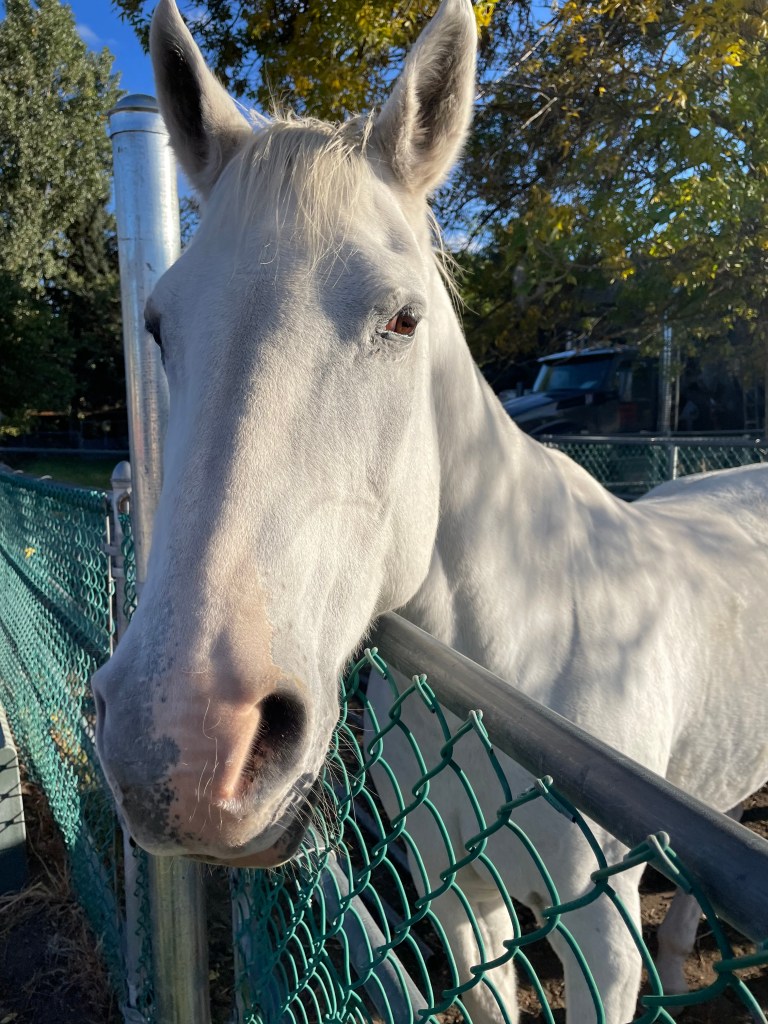
This is Jack from Trotting Horse Therapeutic Riding – another wonderful equine therapy organization located in Missoula, Montana (photo credit JME)
This beautiful creature has so much more to offer. We can learn so much from them, especially through their gift of non-verbal communication. Since I started working with horses, I’ve learned so much about their behaviors. One horse that I’ve worked with is Princess, a Shetland Pony. I have learned so much from her. For instance, she is not shy in expressing her limitations when it comes to setting boundaries. I fear as humans, we will allow our boundaries to be trampled over more than they should be, but Princess does not. Brushing and grooming isn’t her favorite activity. She will let you know when she has had enough with a few subtle cues. She may pin her ears back, take a step forward or backward, turn her head towards you, and if you ignore her subtle cues, she may even show her teeth in a non-threatening manner. Working with horses, especially with Princess, teaches us to respect her boundaries, as we should our own.
Horses are great for energy work. Did you know that a horse’s heartbeat will synchronize with your own? They feel your energy, stress, relaxation. They aren’t like cats and dogs when it comes to petting. A horse would prefer you simply “being with them”. Your presence is enough for them. As we spend more time with them, they produce a healing power generated from them, into you. Their heartrate slows down, as well as yours, as you both become one, a peaceful bliss.
As I earlier mentioned, horses have been compared with cats and dogs, although similar in some behaviors, they are not the same. As I previously noted, horses are prey animals whereas cats and dogs are predators. Their instinct is to hunt, attack, and eat meat. Subsequently, horses are a herd species, feeding on grain, hay, and alfalfa for their diet. Consequently, this significant difference has taught horses to be alert, hyper focused, and extremely intelligent. They are very cleaver beings; they are adaptable to learning new things and have the ability to reason. This, with their intact instinct, allows them to quickly read body language from other horses, animals, and humans by sanctioning them to respond to non-verbal cues.
Understanding the complexity surrounding equine behavior is the key to a successful human/horse relationship. It is imperative for us to understand their behavior, especially when working side by side with them. All these reasons are why horses make great therapy partners, both in the physical therapy sector and within the mental health sector. My experience has taught me that horses make splendid therapy companions. Sadly, they have the vulnerability to be traumatized within an abusive environment, since they are not predators, they display acute signs of trauma, consistent with how we, as humans, display certain traumas.
Non-verbal cues are so powerful, teaching us the power of observation, patience, calming our nervous system with a steady breathing, slowing down our heart rate and teaching us to be present. They teach us through subtle cues, as if they are mirroring us or are we mirroring them? Step back and watch, are you stressed? The horse will be stressed. Are you nervous? The horse will display signs of nervousness. Are you relaxed? They horse will start to relax, becoming synched with you. If you walk into the paddock and notice that the horse is unnerved, take a step back, take in a deep breath and evaluate what you are feeling. I bet you will notice that you are a bit stressed and the horse is reacting to you. This is why they are great for horse therapy; they mirror us.
Horses have been misunderstood, mistreated, and unheard by humans, but we can learn a lot about them. By listening to their gentle breath, feeling their heartbeat next to ours, syncing with their breath, just being present, through silence and peace. Throughout time we have misbelieved that we have taught, trained, and handled horses in accordance with our understanding, but have we? It is not more likely that the horse has taught us how to behave around them. By understanding their behaviors will help us to be better teachers and students.


You must be logged in to post a comment.