Uncategorized

Finding Your Value

FINDING YOUR VALUE

Have you ever thought, why am I here? We spend a lot of our lifetime at work, so this isn’t an unlikely question to ask ourselves. Somedays are more overwhelming than others, and we may ask ourselves, why do I spend so much time at work. The obvious answer is that we work to pay for our lifestyle, without it we would starve. But looking deeper, why?

Do you love your job, or maybe a better question to ask, do you love working with the company where you are now employed? I would bet that a lot of us would say no. Yes we love our jobs but not so much our employers. One would think that we would be more selective when choosing our employer since we spend most of our life with them. Think about this…our bosses get more of our time than we spend with our families, yet they know so little about us, relative to the amount of time we spend with them. As I’m writing this, I’m thinking this is sad.

Why is this sad? The other day I was looking back at my work career and realized that I didn’t always pick the healthiest work environment for myself or my family. How many times do we bring home the drama of a workday, sharing it with our loved ones at home, too many times to count. I’ve worked for so many toxic employers throughout the years, more so than positive work environments.

However, I remember one of my bosses that was a good employer and he valued me as an employee, friend, and a respected individual. We went to lunch once a week and I remember him saying to me, “Thank you for taking time away from your family to spend your day here working for me.” I was stunned with his candidness and honesty…such pure compassion for me, as his employee. His statement made me think about it more deeply, realizing that our employers need us just as much as we need them. They provide an income to us, subsequently, we provide a service allowing them to generate an income from us. It is not one sided, as I formally believed. It is a mutual relationship. This is the key word; it is a relationship. Would we choose a toxic spouse knowingly? I hope not, so why would we lack the same direction in choosing our work environment, especially when it consumes most of our day, week and life.

His simple act of kindness stayed with me, reigniting throughout my career. Today, now that I am the boss of my own companies, I hope to hold those same boundaries and expectations towards my employees and coworkers. I am a big believer in a healthy work-life balance because of him, my prior wonderful boss. I too believe in the importance of always putting your family first, as well as your own mental wellbeing.

COVID in 2020 was a horrible time, but I can say that something positive that came out of it is how many companies now see the value their employees bring to the workplace by working at home. Not all careers have the capacity to work from home effectively, but for the industries that do, this benefited all of us to show that remote and hybrid work is beneficial and healthy, by showing the value that a healthy work-life balance brings. I heard this great quote on TikTok, “Why do people not want to work anymore? It’s not that we don’t want to work, we don’t want to work for crappy companies anymore who don’t value us. We take pride in our work, but not with employers that don’t respect us.”

Most of us want to work hard and be the best we can be. We just want to be valued, respected and heard. We don’t need to be controlled by being forced to work somewhere that treats us unfairly. Find your perfect work-life balance. Choose your next company wisely. Don’t settle for being treated poorly. Value yourself. Value your career. Prioritize what is important to you. Take control of your life and destiny. Your employer will strive with a well-balanced employee, as much as you will. You are worth it – always value yourself before you value someone else.

Uncategorized

LABELS

LABELS

It has been almost ten years since I became obsessed with suicide. As many of you may know, my beautiful daughter died by suicide almost ten years ago on November 26, 2016. Immediately after, I started noticing everything related to suicide and depression. There were more advertisements about it, more television shows, and more social media posts. I was obsessed with reading every book and watching every show on Netflix about suicide and depression. I had become preoccupied with death. I was crazed into learning all I could about depression and all mental health disorders. I wanted to know why my sweet little girl took her life.

Perhaps it was my own perception, but it seemed as if the entire world had been infected with the conversation around suicide. Shortly after, Chester Bennington, from the band Linkin Park, also died from suicide. This is when I was introduced to The American Foundation for Suicide Prevention (AFSP). I was introduced to other parents like me. I was in a new club that nobody wished to be in, but I found some needed support with people who understood what I was going through. I was now labeled as a suicide survivor since I had survived the death of a loved one by suicide. Was I becoming more fixated on suicide that seemed to be suffocating me, or was there more suicide attempts and completion that I was now noticing? I’m not sure, but I started noticing it everywhere.

In groups, we talk about the importance of starting the conversation and speaking up and talking about suicide. I agreed that this was a good point and could help those that felt stigmatized by the word, not feeling comfortable talking about how they are feeling and accepting that they are struggling with their mental health. I felt as if something like this could have helped my daughter and was happy to see that maybe mental health was moving in a more positive, productive direction. I felt as if our society was starting to take notice to our mental health crisis in our country. I became aware that I was reading more articles about prevention. I joined the Riverside Coalition group in Riverside County – helping to better educate educators and society about suicide prevention and awareness. I was pleased with the progress, witnessing, as a society, that we were starting to make a difference when it came to talking about suicide and mental health.

Shortly after that Covid hit and more people were struggling with the isolation, lack of community, and social connection. Once again, that old familiar feeling of fear crept back into my heart. However, I felt as if, our nation, society, and community, we were still on track to understanding the fragility of our nation’s mental health. Once again, I was in awe with our communities. Reporters were opening the conversations, the media was openly addressing mental health awareness, and even the news on the local radio station was supporting individuals, families, and communities. We were doing this together. After Covid, I saw a dramatic improvement with mental health and suicide awareness. Unfortunately, in 2026, I witnessed a decline in our understanding of suicide and mental health awareness.

Have we regressed? Currently, our nation is a mess. We’re dealing with pollical issues daily, hate crimes, falsified news reporting, and deportation issues. I am ashamed of how our nation has handled certain political situations. As a defense to all this hate, we have become fixated on words and language. I do believe that words matter, so I am especially sensitive to this subject, because they do hurt and so many times certain individuals don’t take accountability for their words and actions – this is a shame. I completely believe in the importance of communication.

As I noted earlier, starting up the conversation about suicide ideations, thoughts and mental health awareness, is such a beneficial tool. However, lately, I’ve seen a sensitivity around certain words, creating a stigma that had once been lessened and that stigma is suicide and mental illness. I say mental illness because there is a difference between this and mental health. Mental illness is a diagnosed mental disorder by a professional mental health psychologist, psychiatrist, or therapist. Whereas mental health is about the overall well-being of our mental state. We use these terms loosely, and they are distinctively different. We say that we are open to speaking out about these prospects, but are we?

I have also noticed lately that certain institutions and mental health activists are creating a language barrier between us and mental health agencies. Certain words are no longer allowed to be used, creating confusion on what we can and cannot say to each other. We want to think that we are being sensitive to an individuals’ feelings and emotions by creating new words to camouflage words like suicide and mental illness but unfortunately what we are doing is indirectly, creating more shame. Who is it that we are trying to protect – the industry of mental health? Is it us who have diagnosable disorders or the part of society that doesn’t’ and just thinks that they need to get involved. Personally, all this confusion between what words we can use and cannot use, makes me feel like they don’t really understand us at all. We don’t care about the words used, but rather the ability to communicate how we are feeling and have our voices heard. I don’t want someone to advocate for me if they don’t know what it is like to live in my shoes.

Don’t get me wrong, I don’t wish to shout out my mental health diagnosis to the world, there needs to be a privacy between me, my therapist and my family, if I choose, but I don’t want to feel awkward either. I don’t care so much about the words, but I do want to have the freedom to talk about them without feeling shamed. I can’t tell you how many times people have asked me about my daughters and when I say that my youngest daughter died by suicide, they get this blank look upon their face, changing the subject or saying something uncomfortable and awkward. I get it, it’s not a comfortable conversation to discuss, but this is my life. Someday, my wish is that we, as a society, can treat suicide and mental health disorders as we would a physical illness, with grace, compassion, and understanding, and without the awkwardness. Mental illness is an illness just like any physical illness, it just so happens to be associated with the mind, instead of the physical body. I’m not sure why we have separated the body from the mind, while making the mind a shameful organ. It’s a mystery to me. The brain is an organ, just as the heart is an organ. Perhaps it is because we don’t understand the mind. My hope is that as science grows and develops, we will better understand the mind the same as the body, treating both equally without shame and judgements.

Most of us just want to be understood and heard. Shame isolates, creating feelings of loneliness, worthlessness, and desperation. Just because we have a mental disorder doesn’t mean that we are broken. As of any illness or disease, we can find a cure. Medications can help us to live healthy lives. Labels only make us feel more isolated and alone. We aren’t a label. We are human beings with hearts, souls, and minds. We all want the same thing – to be loved, heard, understood and find a lasting connection.

I don’t want to feel ashamed of who I am anymore. I don’t want to be labeled as a person with anxiety and PTSD. I don’t want the stigma that I am broken. I don’t want to feel ashamed. I don’t want to be unheard anymore. We are all beautiful inside and outside, in body, mind, and soul. Let’s just live our lives to the fullest, with our community, and in peace. It is okay that we aren’t perfect. None of us are, but what we are, is a community loved by each other.

If you or someone you know is struggling with thoughts of suicide or suicidal ideations, you are not alone, text 988, visit them online at https://988lifeling.org to learn more about how they can help, or reach out to someone you trust, such as a mentor, friend, or a family member for support.  We are in this battle together and always remember that you are never alone.

Uncategorized

Never Stop Believing in your Dreams

NEVER STOP BELIEVING IN YOUR DREAMS

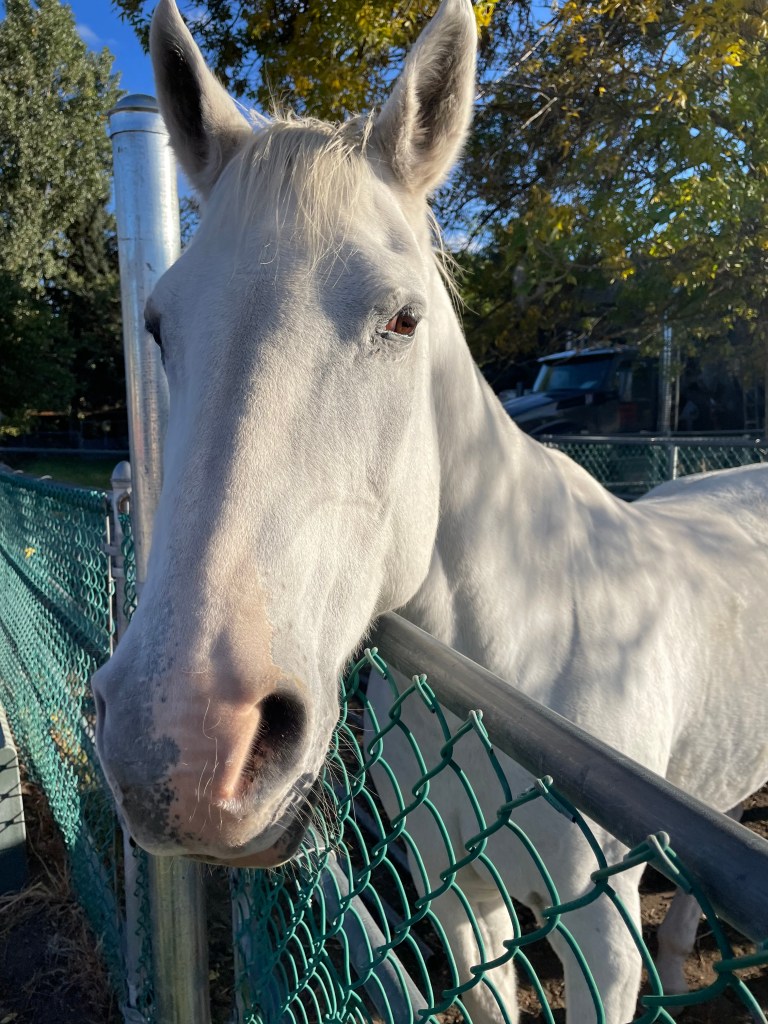
When I think about the good-old west, Montana comes to mind. It is a place where horses run free, blue topped mountain tops with cascades of white drifting down into pastures of green, gentle rivers flowing effortlessly down stream while casual floaters carelessly drift past, under the summer sun, and where a handshake still means something. This is what I think of when I think about what Montana is and what it means to me. A perfect place to build a ranch.

The Jewels’ Angles Foundation, Inc.’s – Jewels’ Angels Ranch. I thought it would be fun to share our building journey with you. The grand opening of the Jewels’ Angels’ Emotional Support Horse Therapy Ranch has moved to June 2025. We have broken ground in Anaconda, Montana. We will continue to update you on our progress, and we hope you will follow us through this process, on this exciting expedition.

Our program is set up to target teens between the ages of ten and eighteen years of age, who would benefit from working side by side with a rescue horse and team mentor. We will be teaching our clients about developing stronger self-esteem, self-confidence, and self-empowerment skills, while learning the benefits of quality time, exploring nature, on a horse ranch, surrounded by love, kindness and the gentleness of a soft, wet nose sniffing your hand – a time for self-reflection. You do not need to be struggling with suicidal ideations or thoughts to be a part of our program; however, we will be strongly focusing on this area.

Horse therapy offers many benefits, both physical and emotional, offering a non-verbal communication between a horse and a teen by strengthening the emotional bond, allowing them to communicate without words:

Physical benefits

  • Balance
  • Muscle building
  • Strength
  • Relaxation

   Emotional benefits

  • Building self-esteem
  • Empowerment
  • Patience
  • Regaining trust
  • Feeling acceptance
  • Improved concentration
  • Self-respect
  • Confidence

Horse therapy allows individuals to learn to live in the present by spending time outdoors and with nature, bringing comfort back into their lives and broadening their senses.

Studies show that interacting with a horse is to deal with their mood swings, attitudes, and unique personalities, making their temperament like that of a teenager during their adolescent years.

Our program provides a healthy and healing atmosphere for the teen and young adult, allowing them to bond and connect with a horse trained for emotional healing, with an emphasis on educating about the importance of establishing a healthy, mental well-being, as an alternative to making poor choices; by providing them with a sense of belonging and self-love.

We offer supportive, boys, girls, and co-ed groups, led by dynamic, responsible, and well-trained leaders, including our horses, teaching teens the ability to learn about themselves individually through acceptance and personal growth.

Please continue to follow us on our journey as we maintain our exploration into the exciting world of building a ranch in Montana.